


Halka açık yıkanmanın ve halk hamamlarının Anadolu ve kadim Akdeniz havzasının diğer yerlerindeki altın çağının Roma İmparatorluğu’nun ilk imparatoru Augustus’un rakiplerini yenerek imparatorluğunu îlân ettiği târihten geç Antik Çağ’a dek süren Romalılar dönemine denk geldiğini söylemek abartıya kaçmak olmaz. Bu durumun birçok nedeni bulunmaktadır.
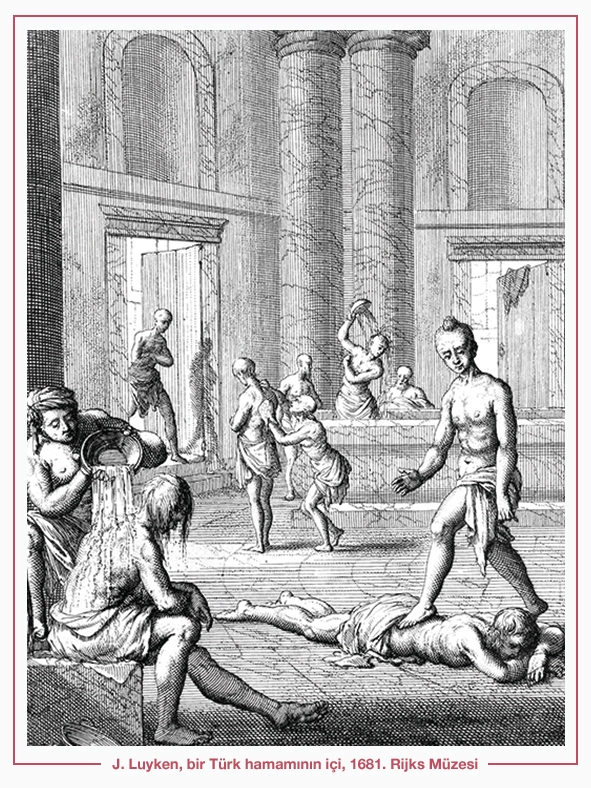
Öncelikle Romalılar büyük hacimleri ısıtmayı sonunda becerebilmiştir. Bir başka nedeni de sistemin refâhını, gücünü ve siyâsî birlik arayışını gösterme isteğinde yatar. İmparatorluğun insan, teknik ve ekonomik olarak kaynakları hamamların inşâsı için araç sağlarken toplumsal ve siyasal politikaları, panayır ve arena gibi diğer kamusal eğlence biçimlerinin yanı sıra, hamamların da kentli kitleleri yatıştırmaya hizmet etmelerini temin eder. Gerçekten veya varsayımsal olarak hamamlar, çok etnikli ve heterojen bir toplumun hayırsever korumacılığı kapsamında eşitlik, birlik ve âidiyet hissine sâhip bir toplum yaratmaya yardımcı olurlardı. Hamamlar, bireyleri imparatorluğun özenle yarattığı kültürel gündeme katmayı ve onların imparatorluğun vizyonunu paylaşmaya katılmasını hedefler.
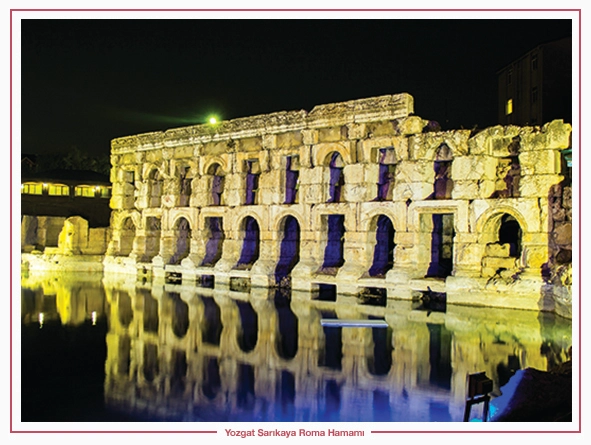
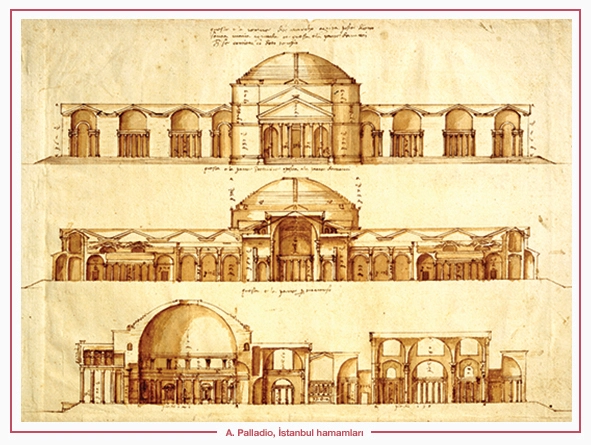
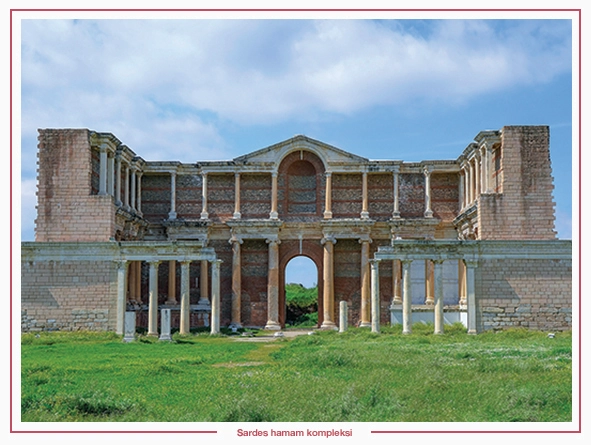
- Gymnasium, Antik Yunanistan’da halka açık yarışmalara katılan atletlerin beden eğitimi için düzenlenmiş, çevresinde revaklı avlular bulunan büyük binâ. Bu yer aynı zamanda sosyalleşme ve entelektüel uğraşılar için de kullanılırdı.
- Aslı Yunan gimnazyumunun bir parçası olan ve atletik egzersizler için kullanılan etrâfı sütunlarla çevrili bir alan. Roma döneminde palaestra hamamlarının egzersiz için kullanılan açık hava avlusu veya bahçesi idi.
- Yunan gimnazyumunda soğuk su ile yıkanılan oda.
- Yıkanma dışında, sportif, eğitici ve sosyal birçok etkinlikleri de kapsayan çok büyük Roma hamamları.
- Küçük hamamlar.
- Hamamlarda musluk altında duran ve su birikmesi için bulunan mermerden tekne.
- Normal olarak ısıtılmamış bir yüzme havuzu. Terim hem havuzu hem de bulunduğu mekânı tanımlamak için kullanılmaktadır.
KAYNAKÇA
Aravumudan, S. (1999) Tropicopolitans: Colonialism and Agency, Raleigh: Duke University Press.
Berger, A. (1982) Das Bad in der byzantinischen Zeit (Miscellanea Byzantina Monacensia 27), Münih: İnstitut für Byzantinistik und Neugriechische Philologic.
Blasquez, J. M. ( 1981) “Las Pinturas Hellennisticas de Qusayr Amra,” Archivo Espanol de Arqecologia, sayı: 54, s. 157-90.
Bohls, E. A. (1994) “Aesthetics and Orientalism in Lady Mary Wordey Montagu’s Letters”, Studies in Eighteenth-Century Culture 23: 179-205.
de Bonneville, F. (1998) The Book of the Bath, New York: Rizzoli Publishers.
Burney, C. (2004) Historical Dictionary of the Hittites, Lanham: Scarecrow Press.
Butlcr, H. C. (1903) Architecture and Other Arts, New York: Century Company.
Butler, H. C. (1920) Ancient Architecture in Syria: Northern Syria, Section B.
(Princeton University Archaeological Expeditions in Syria in 1904-05 ve 1909 Yayınları), Leiden: E. J. Brill.
Butler, H. C. ve W. K. Prentice (1901) “A mosaic pavement and inscription from the baths at Serdjilla”, Revue Archeologique 39: 62-76.
Clark, C. U. (1915) “Moors in Andalusia,” Arts and Archaeology I: 232.
Cook, J. M. (1959) “Bath-tubs in Ancient Greece,” Greece and Rome 6:31-41.
Craven, E. (1798) A Journey through the Crimea to Constantinople, yeniden baskı 1970. New York: Arno Press.
Darblay, J. (1994) Living in İstanbul, Paris, New York: Flammarion.
Dunn, R. E. (1986) The Adventures of lbn Battuta, Londra: Croom Helm.
Ettinghausen, R. (1972) “ The Throne and Banquet Hall at Khirbat al-Mafjar,” Byzantium to Sasanian Iran and the Islamic World (The L. A. Mayer Memorial Studies in Islamic Art and Archaeology 3) içinde, der. R. Ettinghausen, s. 17-6$. Leiden: Brill.
Fıratlı, N. (1974) İstanbul, “Recent Archaeological Research in İstanbul”, Anatolian Studies, sayı: 24, s. 35.
Foerster, R., der. (1903-22) Libanii Opera, Leipzig: B. G. Teubner.
Foss, C. (1986) “Inscriptions Related to the Complex,” The Bath-Gymnasium Complex at Sardis (Archaeological Exploration of Sardis, Report 3), der F. K. Yegül, s. 169-72, Cambridge: The Cambridge Hakluyt Society.
Gibb, H. A. R., çev. ve der, (1961) The Travels of lbn Battuta, A.D. 1325-1354, 2. cilt, Cambridge: The Cambridge Hakluvt Society.
Ginouvés, R. (1962) Balaneutike, Paris: E de Boccard.
Grabar, O. (1954) “The Paintings of the Six Kings at Qusayr Amrah”, Ars Orientalis, sayı: 1, s. 185-7.
Grabar, O. (1955) “The Umayyad Palace at Khirbar al- Mafjar,” Archaeology, sayı: 8, s. 228-35.
Grabar, O. (1973) The Formation of İslamic Art, New Haven: Yale University Press.
Griffiths, A. H. G. (1966) “Theocritius”, The Oxford Classical Dictionary içinde, 3. baskı, der. S. Hornblower ve A. Spawforth, s. 1948-9, Oxford: Oxford University Press.
Grotzfeld, H. (1970) Das Bad im Arabisch-Islamischen Mittelalter: Eine kulturgeschichtliche Untersuchung, Wiesbaden: Otto Harrassowitz.
Grundy, I. (1999) Lady Mary Wortley Montagu, Oxford: Oxford University Press.
Haines, R. C. (1985) “Die Badanlage von Terzili Hamam,” Mitteilungen des deutschen archädologischen Instituts, Abteilung İstanbul 35: 227-35.
Halsband, R., der. (1965) The Complete Letters of Lady Mary W. Montagu, I-III.
(1708-1720). Oxford: Oxford University Press.
Hamilton, R. W. (1959) Khirbat al-Mafjar, Oxford: Oxford University Press.
Hamilton, R. W. (1978) “Khirbat al-Mafjar: The Bath Hail Reconsidered,”Levant, sayı: 10, s. 126-38.
Hanfmann, G. M. A. (1975) From Croesus to Constantine: The Cities of Western Asia Minor and their Arts in Greek and Roman Times, Ann Arbor: University of Michigan Press.
Harding, G. L. (1959) The Antiquities of Jordan, New York: F. A. Praeger.
Haskan, M. N. (1995) İstanbul Hamamları. İstanbul, Türkiye Turing ve Otomobil Kurumu Yayınları.
Herschong, L. (1979) Thermal Delight in Architecture, Cambridge: MIT Press.
Hillenbrand, R. (1982) “La Dolce Vita in Early Islamic Syria: The Evidence of Later Umayyad Palaces,” Art History, sayı: 5.
İnalcık, H. (1973) The Ottoman Empire: The Classical Age 1300-1600, Londra Wedenfeld and Nicolson.
Kafesçioğlu, Ç. (2010) Constantinopolis/Istanbul: Cultural Encounter, Imperial Vision, and the Construction of the Ottoman Capital, Philadelphia: Pennsylvania State University Press.
Kahf, M. (1999) Western Representation of the Muslim Woman: The Termagant Odalisque, Austin: University of Texas Press.
Kietzman, M. J. (1998) “Montagu’s Turkish Embassy Letters and Cultural Dislocation,” Studies in English Literature, 1500-1900, sayı 38, s. 533-51.
Koren, L. (1996) Undesigning the Bath, Berkeley: Stone Bridge Press.
Krummen, E. ve D. A. Russell (1996) “Epithalamium,” The Oxford Classical Dictionary içinde, 3. Baskı, der. S. Hornblower ve A. Spawforth, s. 548, Oxford: Oxford University Press.
Kuban, D. (1996) Istanbul: An Urban History, İstanbul: The Economic and Social History Foundation of Turkey.
Kuran, A. (1986) Mimar Sinan, İstanbul, Hürriyet Vakfı Yayınları.
Lloyd, S. (1967) Early Highland Peoples of Anatolia. Traveler’s History of Anatolia. Berkeley: Londra: Thames and Hudson.
Lloyd, S. (1989) Ancient Turkey: A Traveler’s History of Anatolia, Berkeley: University of California Press.
Melman, B. (1992) Women’s Orients: English Women and Middle East 1718-1918, Ann Arbor: University of Michigan Press.
Miltner, F. (1958) Ephesus, Stadt der Artemis und des Johannes, Viyana: Verlag Ernst Wasmuth.
Müller-Wiener, W. (1977) Bildlexicon zur Topograbie Istanbuls, Tübingen: Verlag Ernst Wasmuth.
Musil, A. (1907) KusejrAmra, 2 cilt, Viyana: K.K. Hof- und Staatsdruckerei.
Naumann, R. (1971) Architektur Kleinasiens, 2. Baskı, I Tübingen: Verlag Ernst Wasmuth.
Noyan, M. E. ve U. Öncü (1987) “Hamam Dosyası— İstanbul’da hamamlar: Bir varmış bir yokmuş,” Çağdaş Şehir, sayı: 1, s. 60-79.
Schede, M. (1965) Die Ruinen von Priene. Berlin: W. de Gruyter and Company.
Seeck, O., der. (1876) Notitia Dignitatum, Berlin: Berolini.
Steskal, M. ve M. La Torre (2001) “Das Vediusgymnasium in Ephesos,” Jahreshefte des Österreichischen Archäologischen Instituts in Wien, sayı: 70, s. 221-44.
Steskal, M. ve M. La Torre (2008) Das Vediusgymnasium in Ephesos (Forschungen in Ephesos XIV/1), 2. cilt. Viyana: Verlag der Österreichhischen Akademie der Wissenschaften.
Steskal, M. ve S. Ladstätter (2004) “Vorbericht zur Baugheschichte des Vediusgymnasiums in Ephesos,” Jahreshefte des Österreichhischen Archäologischen Instituts in Wien, sayı: 73, s. 237-49.
Steskal, M. (2003) “Bumerkungen zur Funktion der Palästren in den Ephesischen Bad-Gymnasium in Ephesos,” Jahreshefte des Österreichhischen Archäologischen Instituts in Wien, sayı: 72, s. 227-239.
Stierlin, H. (1998) Turkey: From the Selçuks to the Ottoman, Köln: Taschen.
Striker, C. L. ve D. Kuban (1971) “Work at Kalenderhane Camii: Fourth Preliminary Report,” Dumbarton Oaks Papers, sayı: 25, s. 253-8.
Striker, C. L. ve D. Kuban, der. (1997) Kalenderhane in İstanbul, Mainz: von Zabern.
Valentini, R. ve G. Zucchetti (1940-53) Codice topografico della citta di Roma, cilt 1, Roma: Topografia del Senato.
Vigarello, G. (1988) Concepts of Cleanliness: Changing Attitudes in France since the Middle Ages, Cambridge: Cambridge University Press.
Vyronis, S. (1971) The Decline of Medieval Hellenism in Asia Minor and the Precess of Islamization from the Eleventh through the Fifteenth Century, Berkeley: University of California Press.
Ward-Perkins, W. B. (1981) Roman Imperial Architecture, New York: Penguin Books.
Yegül, F. K. ve T. Couch (2003) “Building a Bath for the Cameras,” Journal of Roman Archaeology, sayı: 16, s. 1-24.
Yegül, F.K (1982) “A study in architectural iconography: Kaisersaal and the ımperial cult,” Art Bulletin, sayı: 64, s. 7-31.
Yegül, F. K. (1986) The Bath-Gymnasium Complex at Sardis (Archaeological Exploration of Sardis, Report 3), Cambridge: Harvard University Press.
Yegül, F. K. (1992) Baths and Bathing in Classical Antiquity, New York: The Architectural History Foundation.
Yegül, F. K. (2000a) Baths and bathing in Roman Antioch,” Antioch, the Lost Ancient City içinde, der. C. Kondoleon, s. 146-51, Worcester, Princeton: Princeton University Press.
Yegül, F. K. (2000b) “Memory, Metaphor and Meaning in the Cities of Asia Minor,” Romanization and the City: Creation, Transformations, and Failures içinde (Journal of Roman Archaeology Supplement Series 38), der. E. Fentress, s. 133-53, Portsmouth: Journal of Roman Archaeology.
Yegül, F. K. (2003) “Cilicia at the Crossroads: Transformation of Baths and Bathing Culture in the Roman East,” Olba, sayı: 8, s. 55-72.
Yegül, F. K. (2006) “The Baths of Constantinople in Context: The Neighborhood Trilogy,” Common Ground: Archaeology, Art, Science, and Humanities, Proceedings of the XVIth International Congress on Classical Archaeology 2003 içinde, der. C.C. Mattusch, A.A. Donahue ve A. Brauer, s. 200-4, Oxford: Oxford University Press.
Yegül, F. K. (2007) “Adolf Loos and Decorating Classical Architecture,” Love of Lydia: A Sardis Anniversary Volume Presented to Crawford H. Greenewalt, Jr içinde, der. N. Cahill, s. 203-26, Madison: University of Wisconsin Press.
Yegül, F. K. (2008) “The Baths of Constantinople: An Urban Symbol in a Changing World,” Archaeology and History in Roman, Medieval and Post-Medieval Greece: Studies on Method and Meaning in Honor of Timothy E. Gregory içinde, der. W. Caraher, L. J. Hall ve R. S. Moore. Aldershot: Ashgate.
Yegül, F. K. (2010) Bathing in the Roman World, Newyork: Cambridge University Press. (Türkçesi: Roma Dünyasında Yıkanma, Koç Üniversitesi Yayınları, 2011.)